
So You’re Considering a Back Seven CSA…
And like myself, you like as much detail as possible. And also, what is a CSA? And, why a plant CSA? And finally, how will I make this work for my garden?
If you have additional questions beyond what is answered within this post or on this page, feel free to send me a question and we can continue the conversation there. The Back Seven Garden CSA is a new concept and I want all gardeners to be fully confident in their decision to participate!
What is a CSA?
Community Supported Agriculture! Adopted by small scale farmers in the late 1970s, the CSA model was created to provide farmers with income, or “seed money” during their slowest season. CSA participants aid the farm in purchasing the seeds and equipment necessary to produce food the rest of the season. In return CSA participants receive regular shares of the product grown by the farm during that year. Often, the produce received by CSA members is equivalent to purchasing it at a discounted rate.
For a deeper history on the CSA model, I encourage you to research Booker T Whatley and the CSA movements in Japan and the United States that paralleled one another in the 1980s.
What’s the Benefit of a Plant CSA?
Cost
Every year it becomes more expensive to garden. High prices for fertilizer, higher costs for seed packets, etc. This affects the cost of transplants. Financially the, Garden CSA provides you a high quantity of plants at a markdown from when you purchase them at the pop-up booth or farmers market. When you participate in the CSA, each plant costs you only $4.50!
Guidance
The Back Seven Garden CSA is curated with the intent to assist novice as well as seasoned gardeners in growing their own food year round. Perhaps you recently moved to the PNW and you’re adjusting your gardening knowledge to a new climate, maybe you’re brand new to growing vegetables? If this is your case, the 1-2 monthly newsletters published on this blog will be there your place to seek guidance on how to make the most of your garden. From amending your soil, different plant spacing guides, pest and climate solutions, and recipes—the newsletter will offer it all.
Flexibility
Allergic to peppers? Don’t like cilantro? Want to make a large batch of pickles? Each month at the CSA pick-up, you can swap your plants for the items that you want. Help the farm fulfill your requests by letting us know as soon as possible that you’re seeking more or less of something! We try to accommodate where we can, but ultimately we can only swap what’s available from our stock!
Community & Trust
The Garden CSA distributes plant starts at the time when it’s safe to plant them. You won’t receive tomato plants in April or pumpkins in September because we wouldn’t plant them in our own fields at that time!
How does this CSA fit into my gardening?
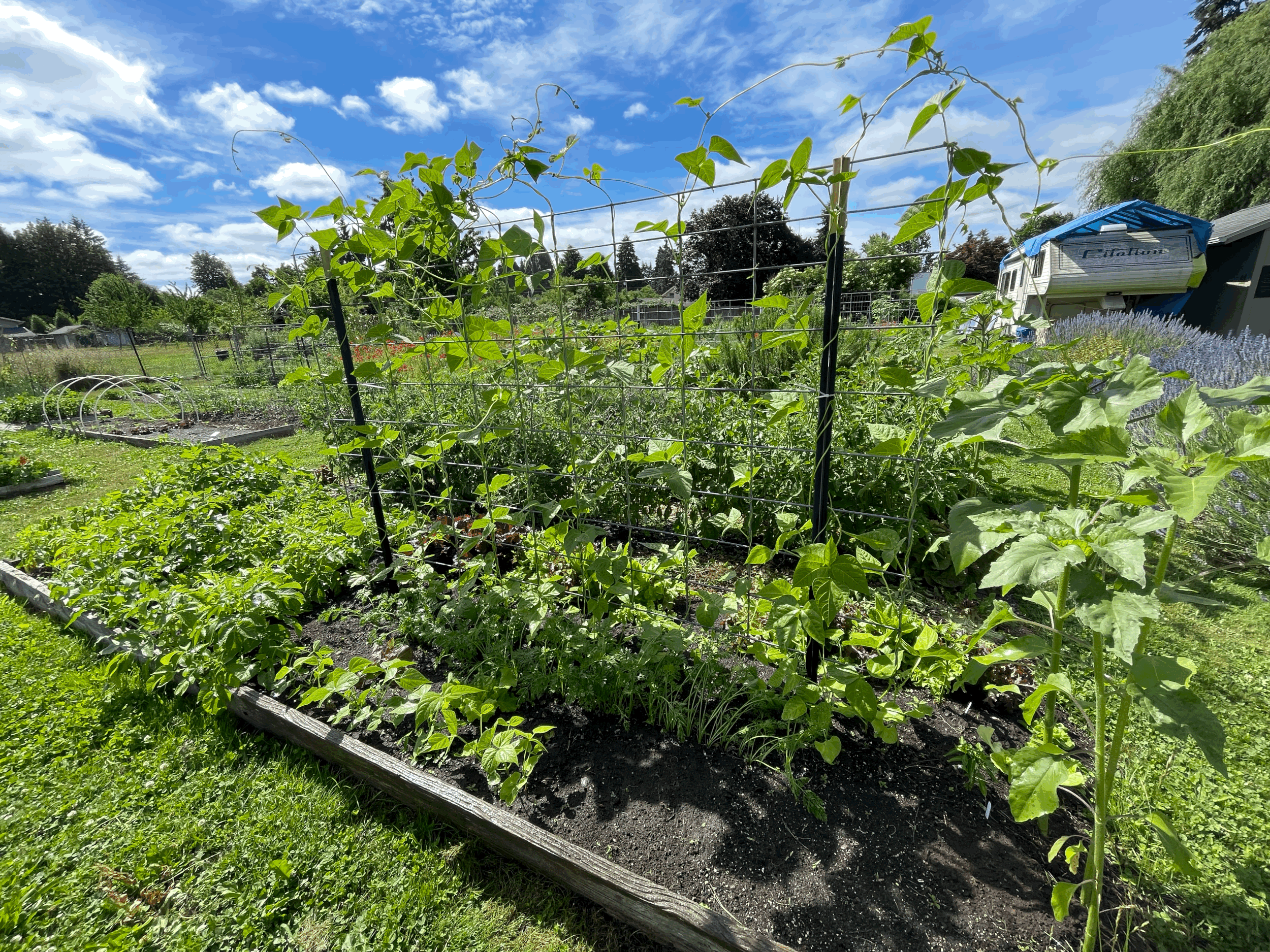
Plants in the CSA were selected to fit a 4×16’ garden plot—and then a little more. What you do with those extras is up to you! But if you don’t plant them in your own additional space, we hope you’ll share them with someone who will!
Some vegetables and flowers are best seeded directly. So if you’re after a productive carrot harvest or find delight in salad turnips, it’s best that you save space in your plot for these items and purchase seeds from a trusted seed supplier.
In almost every month of the Garden CSA, you will receive some type of lettuce or leafy salad green. This is designed to provide you will multiple successions throughout the year so you can have a continual harvest of these quick-growing items.
The last month of the CSA is in September, but the veggies planted during this time will provide you harvests through winter and early spring.
Participants who accept the CSA as it is curated and choose not to make swaps for other plants will receive a diverse selection of vegetable throughout the year that will serve as a good sampler of what items you may want to grow in larger quantities in future growing seasons!